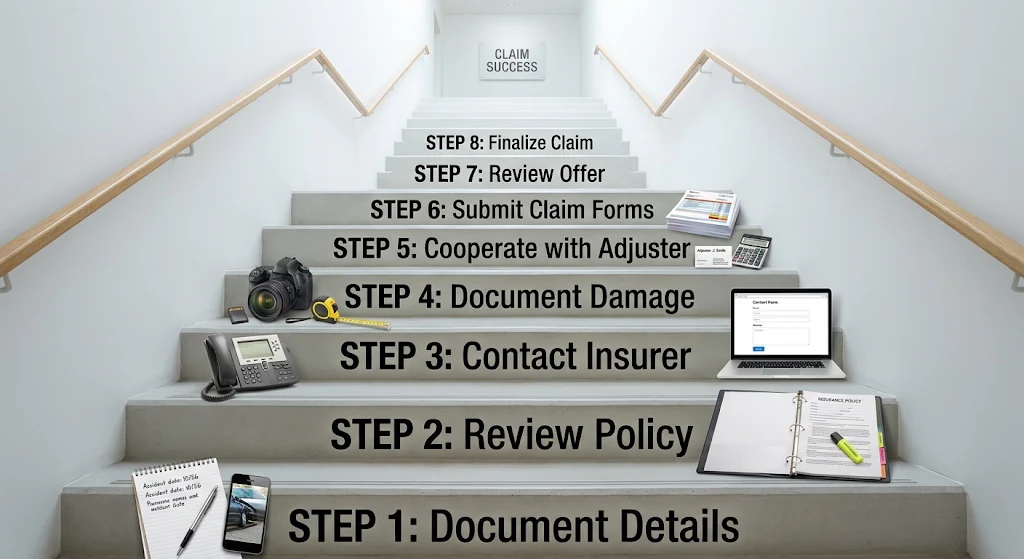
Filing an insurance claim successfully requires more than simply notifying an insurance company after an unexpected event. Policyholders must understand their contractual responsibilities, comply with notification requirements, provide accurate information, gather supporting evidence, and follow the procedures established under their insurance policies. Whether dealing with property damage, motor vehicle accidents, business interruptions, medical expenses, or other insured losses, a properly organized claim can help insurers assess the circumstances and determine the benefits available under the policy. Delays, incomplete documentation, inaccurate declarations, and failure to follow policy conditions can complicate the claims process and potentially affect the outcome. Global Insurance Company recognizes that understanding the insurance claims process is essential for protecting financial interests and managing unexpected losses effectively. By following a structured approach from initial incident reporting through claim assessment and settlement, individuals and businesses can improve claim preparation, fulfill policyholder obligations, and navigate insurance procedures with greater confidence.
“A successful insurance claim begins with prompt notification, accurate documentation, complete supporting evidence, and a clear understanding of the policy conditions governing the loss.”
Global Insurance Company Expert
Understanding the Insurance Claims Process and Your Policyholder Responsibilities
An insurance claim is a formal request submitted by a policyholder or an authorized representative asking an insurer to provide benefits for a loss or event that may be covered under an insurance contract. The claims process allows the insurer to examine the reported incident, verify the policy details, evaluate supporting documentation, determine whether coverage applies, and calculate any amount payable in accordance with the policy terms. Different insurance products follow different procedures, meaning that property insurance claims, motor insurance claims, health insurance claims, life insurance claims, and commercial insurance claims may require different forms, evidence, and assessment methods. Global Insurance Company emphasizes that policyholders should understand their responsibilities before submitting a claim, including notification deadlines, documentation requirements, cooperation with investigations, and obligations to prevent further damage where reasonably possible. Reading the policy wording and contacting the insurer or authorized claims representative for procedural clarification can help establish the correct steps and reduce avoidable complications during the insurance claim process.
Step 1: Report the Insured Incident to Your Insurance Company Promptly
The first step in filing an insurance claim is notifying the insurance company about the incident or loss as soon as reasonably possible and within the notification period specified by the policy. Prompt reporting allows the insurer to register the claim, provide reference information, explain the required procedures, and arrange any necessary investigation or assessment. Depending on the circumstances, an incident may involve a vehicle accident, property damage, theft, fire, medical emergency, workplace injury, equipment breakdown, or business interruption. Policyholders should provide a clear account of what happened, including the date, time, location, people involved, and the apparent nature of the loss. Where an incident involves theft, suspected criminal activity, or circumstances requiring emergency assistance, the relevant authorities should also be contacted as appropriate. Global Insurance Company recommends retaining the claim reference number and recording the date and method of notification. Early communication helps establish an organized claims record and reduces the risk of missing important reporting requirements. However, notification alone does not guarantee that a claim will be accepted, as coverage remains subject to the applicable policy terms and conditions.
Step 2: Review Your Insurance Policy and Confirm the Applicable Coverage
Before completing the claim submission, policyholders should review their insurance documents to understand the coverage provisions relevant to the reported incident. Important details include the insured property or activity, covered events, policy limits, deductibles or excess amounts, exclusions, waiting periods, special conditions, and any applicable notification requirements. This review helps establish whether the reported loss may fall within the scope of the insurance contract and identifies the information the insurer is likely to require. For example, a motor insurance policy may distinguish between comprehensive coverage and third-party liability protection, while commercial property insurance may have specific requirements relating to fire damage, theft, business equipment, or stock. Business interruption coverage may also depend on particular insured events and policy-defined triggers. Global Insurance Company encourages policyholders to examine the policy schedule, wording, endorsements, and renewal information rather than relying solely on general descriptions of insurance benefits. If any provision is unclear, clarification should be obtained from the insurer or authorized insurance professional before assumptions are made about the availability or extent of coverage.
Step 3: Collect Supporting Evidence and Document the Loss Thoroughly
Supporting evidence is an essential part of the insurance claims process because it helps establish the circumstances, extent, and financial value of the reported loss. Policyholders should collect relevant photographs, videos, purchase receipts, invoices, repair estimates, medical reports, police reports, witness details, inventory records, and other documents appropriate to the type of claim. For property damage, photographs should clearly show the affected areas and damaged items before repairs or disposal, where it is safe and practical to do so. Motor insurance claims may require vehicle photographs, accident details, registration information, and official incident reports where applicable. Commercial insurance claims may involve financial statements, accounting records, supplier invoices, payroll information, equipment inventories, and operational records. Global Insurance Company emphasizes the importance of preserving original documents, keeping copies of submitted evidence, and maintaining a chronological record of relevant events. Policyholders should never alter photographs, fabricate receipts, exaggerate losses, or provide misleading information. Accurate and organized documentation helps the insurer evaluate the claim more efficiently and supports a transparent assessment of the reported circumstances.
Once the necessary information has been collected, the next step is completing the insurer's official claim form and submitting the supporting documents requested for the particular policy and incident. Claim forms commonly request policyholder details, policy numbers, incident dates, descriptions of the circumstances, estimated losses, affected property, third-party information, and relevant supporting evidence. Every section should be completed carefully using accurate and consistent information. Where a question does not apply, policyholders should follow the form's instructions rather than leaving important sections unexplained. Any estimates, invoices, medical records, repair quotations, or financial documents should correspond with the reported incident and be submitted in the format required by the insurer. Global Insurance Company recommends checking the completed claim form against the policy schedule and supporting records before submission. Incomplete forms, conflicting information, missing signatures, or omitted documents may result in requests for clarification and additional processing time. Policyholders should retain a copy of the completed form and obtain confirmation that the insurer has received the submission.
Step 5: Submit Your Insurance Claim and Retain Proof of Submission
After reviewing the claim form and supporting evidence, policyholders should submit the complete claim through the official channel specified by their insurance company. Depending on the insurer, available submission methods may include an online claims portal, email, an authorized representative, a designated claims office, or another approved communication channel. It is important to follow the insurer's instructions concerning document formats, original records, submission deadlines, and any additional declarations required. After submission, policyholders should request acknowledgment of receipt and confirm that the claim has been registered under a reference number. This information provides a useful record for future communication and allows the policyholder to track the progress of the claim. Global Insurance Company highlights the importance of maintaining an organized claims file containing copies of all submitted documents, correspondence, reference numbers, and communication dates. A clear record of the submission process helps prevent misunderstandings and makes it easier to respond promptly if the insurer requests additional information or clarification.
Step 6: Cooperate with the Insurance Claim Investigation and Assessment
Following claim registration, the insurance company may conduct an investigation or assessment to establish the circumstances of the incident, verify the reported loss, and determine whether the claim falls within the policy's coverage provisions. Depending on the type and complexity of the claim, this process may involve reviewing documents, interviewing relevant parties, inspecting damaged property, arranging vehicle assessments, obtaining professional reports, or requesting additional financial information. An appointed loss adjuster, surveyor, medical reviewer, investigator, or other specialist may assist the insurer where necessary. Policyholders should cooperate with reasonable requests, provide accurate explanations, make relevant records available, and respond to questions within the requested timeframes. Where damaged property requires urgent attention, reasonable measures should be taken to prevent further loss, subject to policy requirements and safety considerations. Global Insurance Company emphasizes that policyholders should retain records of inspections, assessment appointments, additional document requests, and communications with the claims team. Cooperation supports a clearer evaluation of the claim, although the insurer's final decision remains subject to the evidence, applicable policy wording, exclusions, limits, and conditions.
Step 7: Monitor Claim Progress and Respond to Additional Information Requests
Insurance claims may require several stages of verification, assessment, and communication before a decision is reached. During this period, policyholders should monitor claim progress through the insurer's approved communication channels and respond promptly to requests for additional documentation or clarification. Such requests may involve further photographs, original receipts, repair quotations, medical certificates, police reports, ownership records, financial statements, or explanations of particular circumstances. If a document cannot be obtained immediately, the policyholder should communicate the reason and ask whether an alternative form of evidence is acceptable. It is also useful to maintain a written record of conversations, including the date, name or department of the person contacted, and any agreed follow-up actions. Global Insurance Company recommends following up professionally when a claim remains outstanding beyond the timeframe communicated by the insurer. Policyholders should also request clarification if they do not understand the status of the claim, outstanding requirements, or expected next steps. Consistent communication helps maintain visibility over the claims process and reduces the possibility of avoidable administrative delays.
Step 8: Review the Insurance Claim Decision and Settlement Details
Once the insurer has completed its assessment, it will communicate its decision regarding the claim and explain any applicable settlement arrangements. Depending on the policy and circumstances, an approved claim may result in a cash payment, reimbursement, repair authorization, replacement arrangement, payment to an approved service provider, or another benefit permitted under the insurance contract. The settlement amount may be affected by policy limits, deductibles or excess amounts, depreciation provisions, underinsurance conditions, exclusions, sub-limits, and other contractual terms. Policyholders should review the settlement statement carefully to understand how the amount was calculated and whether all relevant items have been considered. If the claim is partially accepted, reduced, or declined, the insurer should be asked to explain the decision and identify the policy provisions and evidence relied upon. Global Insurance Company emphasizes that policyholders should examine settlement documents before confirming acceptance and should seek clarification regarding any unresolved concerns. Where a disagreement remains, the policyholder may use the insurer's internal complaints procedure and any applicable external dispute resolution or regulatory channels available in the relevant jurisdiction.
Common Insurance Claim Filing Mistakes and How to Avoid Them
Even when an incident appears straightforward, mistakes during the insurance claim process can create unnecessary complications, delay assessments, or affect the benefits available under a policy. One common error is failing to notify the insurer within the required period, which may create difficulties where the policy contains specific reporting conditions. Another is submitting incomplete claim forms or failing to provide documents that support the reported loss. Inaccurate incident descriptions, inconsistent dates, unsupported repair estimates, and missing evidence can also lead to additional investigation or requests for clarification. Some policyholders dispose of damaged property or begin non-emergency repairs before documenting the loss or obtaining any assessment required by the insurer. Others assume that every expense associated with an incident is automatically covered, without considering exclusions, deductibles, limits, or policy conditions. Global Insurance Company recommends approaching every claim with accuracy, transparency, and careful recordkeeping. Policyholders should report incidents promptly, preserve available evidence, follow insurer instructions, and avoid making unsupported statements or exaggerated declarations. Understanding these common mistakes helps create a more organized and responsible approach to filing insurance claims.
Practical Checklist for Preparing and Filing an Insurance Claim Successfully
A structured checklist can help policyholders organize the information required throughout the insurance claims process. Although the exact requirements differ according to the insurance product, incident, insurer, and applicable jurisdiction, the following steps provide a practical starting point for preparing a complete and accurate claim:
- Notify the insurance company promptly and comply with the incident reporting requirements specified in the policy.
- Record the date, time, location, circumstances, and relevant details of the insured incident.
- Review the policy schedule, coverage wording, exclusions, limits, deductibles, and applicable claim conditions.
- Collect photographs, videos, receipts, invoices, repair estimates, reports, and other relevant supporting evidence.
- Complete the official insurance claim form accurately and ensure that all required sections and declarations are addressed.
- Submit supporting documents through the insurer's approved claims channel and retain copies of every submission.
- Obtain a claim reference number and confirmation that the insurance claim has been registered.
- Cooperate with reasonable investigations, inspections, assessments, and requests for additional information.
- Monitor claim progress and maintain records of correspondence, assessment updates, and important decisions.
- Review the final settlement decision carefully and request clarification or use the appropriate complaints process if necessary.
Global Insurance Company recognizes that effective insurance claim preparation depends on accurate information, organized documentation, timely communication, and compliance with policy requirements. By following these practical steps, policyholders can approach the claims process with greater clarity and reduce avoidable administrative complications. Although no procedure can guarantee claim approval or a particular settlement amount, careful preparation helps insurers evaluate reported losses using the information and evidence available.
Successfully filing an insurance claim requires an informed and organized approach from the moment an incident occurs until the insurer communicates its final decision. Understanding policy requirements, reporting losses promptly, preserving supporting evidence, submitting accurate documentation, and cooperating with claim assessments are essential responsibilities for policyholders. Whether managing personal insurance claims or complex commercial losses, maintaining clear records and following the insurer's procedures can make the process more manageable and transparent. Global Insurance Company encourages individuals and businesses to review their insurance arrangements regularly, understand their claims obligations, and seek clarification whenever policy provisions or settlement decisions are unclear. A well-prepared claim supports a more effective assessment process and helps policyholders pursue the benefits available under their insurance contracts.